Product Management
-
Case Study: How We Fixed a “Broken” E-Commerce Journey by Ignoring the Specs
The Challenge: We were tasked with building a comprehensive e-commerce platform for a major tyre manufacturer. The technical requirements were flawless: we ingested complex data sets including dimensions (e.g., 205/55 R16), pressure ratings, tread patterns, and rubber compounds. We launched a technically perfect site. The result? Near-zero conversion. The Discovery: Despite high traffic, users were bouncing at the product selection screen. I led a series of user interviews to understand the friction. The insight was simple but devastating: Stop building for experts. Unless you are selling to engineers, your customers don’t care about your specs. They care about their problem. The Solution: We pivoted from a Product-Centric search to a…
-
The ‘Granny’ Hack: Turning AI’s Biggest Weakness Into Its Ultimate Trap
The perfect trap doesn’t look like a trap. It looks like an opportunity. When a phone scammer hears the voice of “Daisy”—a rambling, confused grandmother—they think they have hit the jackpot. They hear a vulnerable target. They hear someone they can manipulate. The caller hears the long, 4-second pauses before she answers a question, and assumes she is struggling to keep up. They think they are winning. But they are wrong. They are talking to a Python script. And that 4-second silence isn’t confusion—it’s Latency Engineering. The Technical Wall Building a real-time Voice AI has a massive technical hurdle. The loop of Speech-to-Text → LLM Processing → Text-to-Speech takes time.…
-
Why Product Managers Need to “Unlearn” Marketing (A Lesson from European Data Privacy)
The Hardest Instruction I Ever Received When I moved to Europe and applied for my driver’s license, my instructor told me something fascinating on day one: “Vimalesh, before you can learn to drive here, you must unlearn everything you know about driving.” Coming from India, driving for me was Intuitive. It was a negotiation with the road. When we honk, it isn’t aggression—it is communication. It implies “I am here, stay safe.” It works because everyone is hyper-aware of their surroundings. It relies on human judgment. But in Europe, the system is Rigid. The horn is not for communication; it is a warning. If you drive based on “intuition” instead…
-
The 90% Dilemma: Navigating Product Prioritization with the Pareto Principle
As product managers, we often find ourselves in the fascinating yet challenging position of deciding what to build and when. Recently, I was immersed in planning a significant feature – a crucial migration from our one system to a brand-new platform. My initial approach, was motivated by a desire for thoroughness, was to map out every conceivable user journey, scenarios and corner case. My vision was to have a seamless transition for 100% of our users, meticulously planned across multiple releases. My detailed roadmap accounted for every potential scenario, every possible click, and the unique needs of each user segment. While the intent was ideal – ensuring no user was…
-
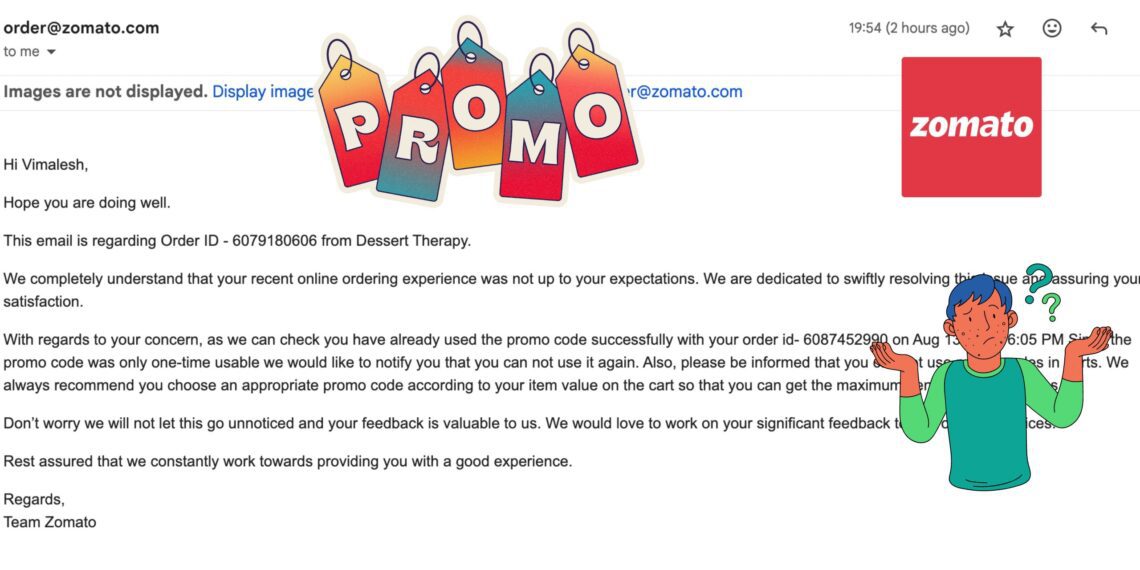
Zomato’s Confusing Voucher: A Case Study in User Experience Gone Wrong
As a Business Analyst and Product Manager, I’m always fascinated by how companies design their products and features. Recently, I had an experience with Zomato that left me questioning their user-centricity and decision-making process. Here’s what happened. I ordered food, it arrived a mess, and Zomato, to their credit, offered me a ₹590 voucher as an apology. Great, right? Well, not quite. Like many regular Zomato users, I’m accustomed to clicking through various offers and discounts during checkout. It’s become second nature. So, when I placed my next order, I unknowingly applied a ₹160 discount without realizing it was part of my ₹590 voucher. Days later, I tried to use…